The terms NIMBY (Not in My Back Yard) and YIMBY (Yes in My Back Yard) have become better known and understood in recent years. There are several insights from research and experience beyond NIMBY and YIMBY which have a demonstrated impact on housing and zoning policies. Among those are the notion of perverse incentives. Varied agendas and interest groups can limit or increase access to affordable housing and thus impact what is often the single biggest cost of living.
While food and fuel may grab headlines, governmental and corporate housing policies are the area that could potentially save Americans of all backgrounds the most money.
Despite the recent passage of the 21st Century ROAD to Housing Act, it is increasingly clear that the highly bipartisan legislation is unlikely to have a meaningful or rapid impact on housing costs. Who says? Among others, Legis1, Shelterforce, and the Congressional Research Service (CRS).
Among the surprises for many? Despite decades of rhetoric, both major parties have known the key causes and possible cures for solving the U.S. affordable housing crisis. Once the basics are grasped along with the role of perverse incentives and possible solutions can come into focus.
According to HUD researchers, Pamela Blumenthal and Regina Gray in a HUD Edge article pointed to local zoning and regulatory barriers are near the heart of the housing crisis problem. Their HUD post was published well before the 21st Century ROAD to Housing bill was enacted.
Quoting Gray and Blumenthal: “Without significant new supply, cost burdens are likely to increase as current home prices reach all-time highs…”
HUD’s duo elaborated: “The regulatory environment — federal, state, and local — that contributes to the extensive mismatch between supply and need has worsened over time. Federally sponsored commissions, task forces, and councils under both Democratic and Republican administrations have examined the effects of land use regulations on affordable housing for more than 50 years. Numerous studies find land use regulations that limit the number of new units that can be built or impose significant costs on development through fees and long approval processes drive up housing costs.”
Look again at what HUD’s Blumenthal and Gray wrote. For “more than 50 years” “Federally sponsored commissions, task forces, and councils under both Democratic and Republican administrations have examined the effects of land use regulations on affordable housing…”
Meaning, for over half a century, the root cause of the U.S. housing crisis was known, yet neither major party demonstrated the political will to properly address the issues of zoning and regulation. By design, as the Senate brief to the ROAD act repeatedly said, local zoning was largely untouched. Over a month after the ROAD bill passed into federal law without President Donald J. Trump’s signature, the Congressional Research Service (CRS) admitted that the bill leaves most programs unfunded.
While subsidies may benefit a relative few, the math and some 6 decades of experience makes it clear that subsidies have never been enough and will never be able to support all those who need or want more affordable housing.
The National Association of Home Builders (NAHB) said in 2025 that 74.9 percent of U.S. households are ‘priced out’ of buying a conventional site built house.
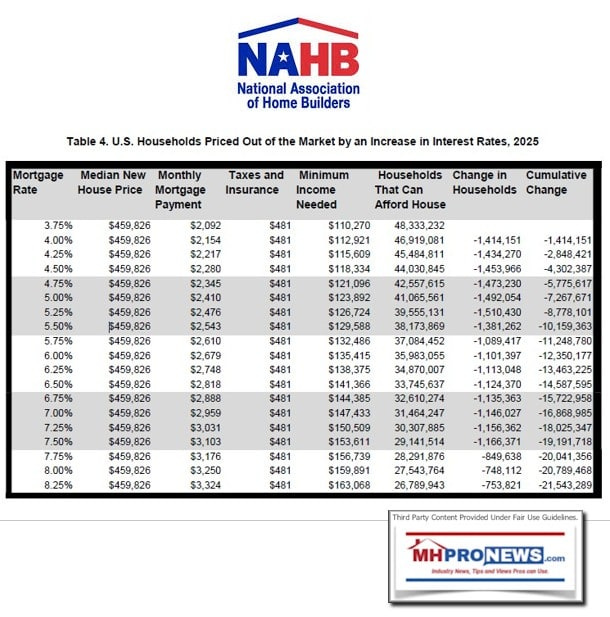
According to Freddie Mac on 10.16.2026 the current rate for a 30-year fixed rate mortgage is 7.4 percent. So, using the NAHB chart above, it will require a household income of about a $150,000 to support that loan.
According to iPropertyManagement “The average U.S. monthly rent in 2026 is $1,698 — up 2.91% year-over-year and 43.3% since 2020’s $1,185.”
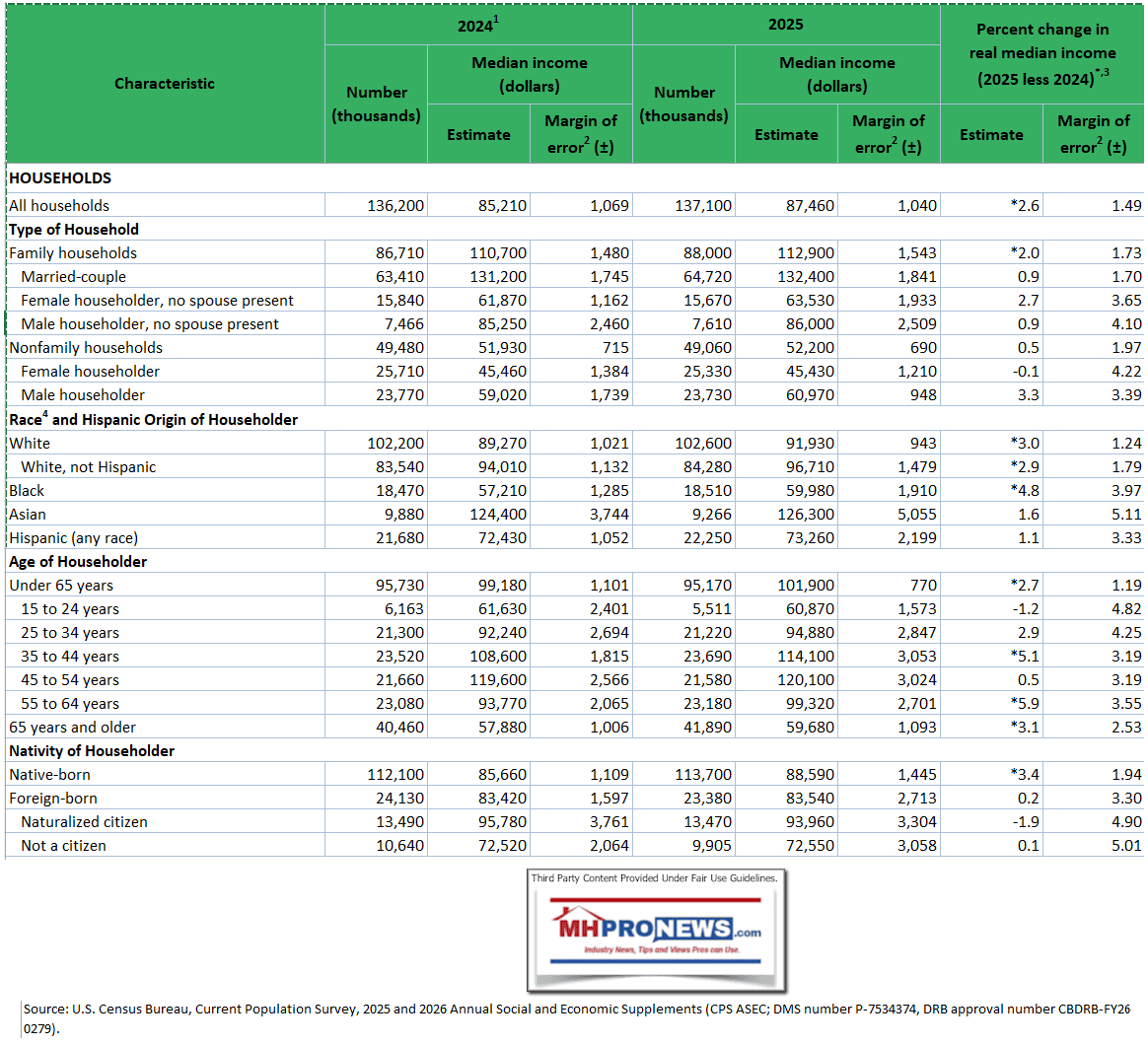
The U.S. Census Bureau in their Sept 2026 report said that in 2025 the median household income is $87,460.
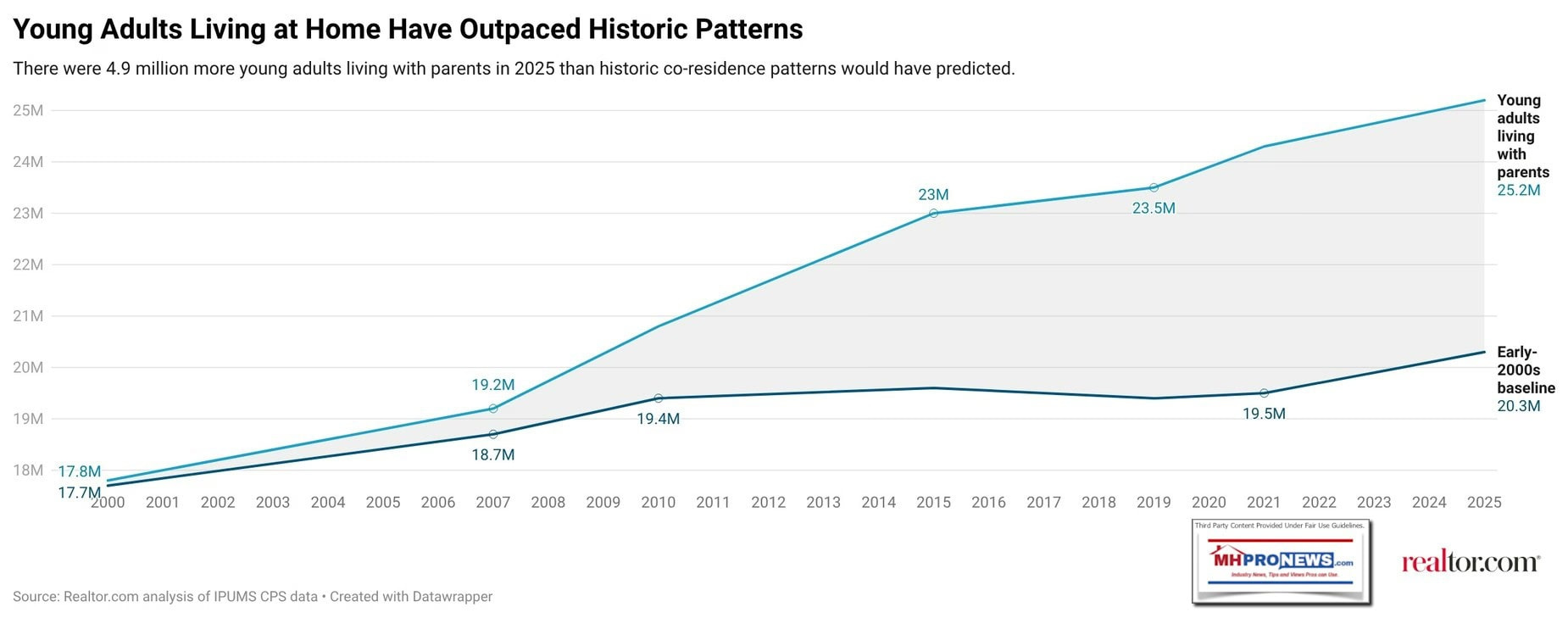
Is it any wonder that the 2026 Federal Reserve SHED Study Finds Nearly Half of Gen Z and Adults Under 30 Living with Parents. Implications for Conventional and Manufactured Housing Industries. FEA and that the National Association of Realtors (NAR) recently reported record 25.2 million young adults living with parents?
Here is the bottom line. Only federally regulated HUD Code manufactured homes (sometimes incorrectly called ‘mobile homes’ or ‘trailer houses’) can help close the estimated 7 to 10 million housing unit gap.

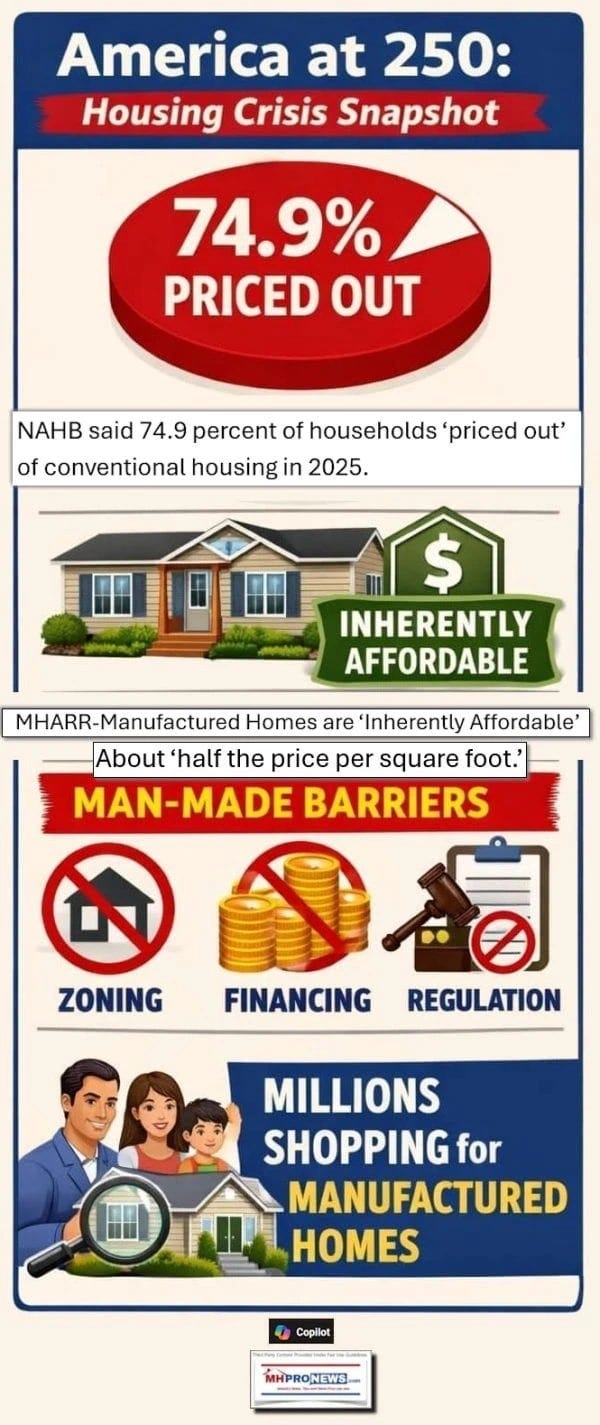
There are many questions that this introduction leaves unanswered. Two recent reports on industry-leading MHProNews.com are useful ways to learn more. The first is infographic rich and only about 230 words.

The second report is a deep dive, thousands of words that cited several academic, university level research, governmental, association and other sources.

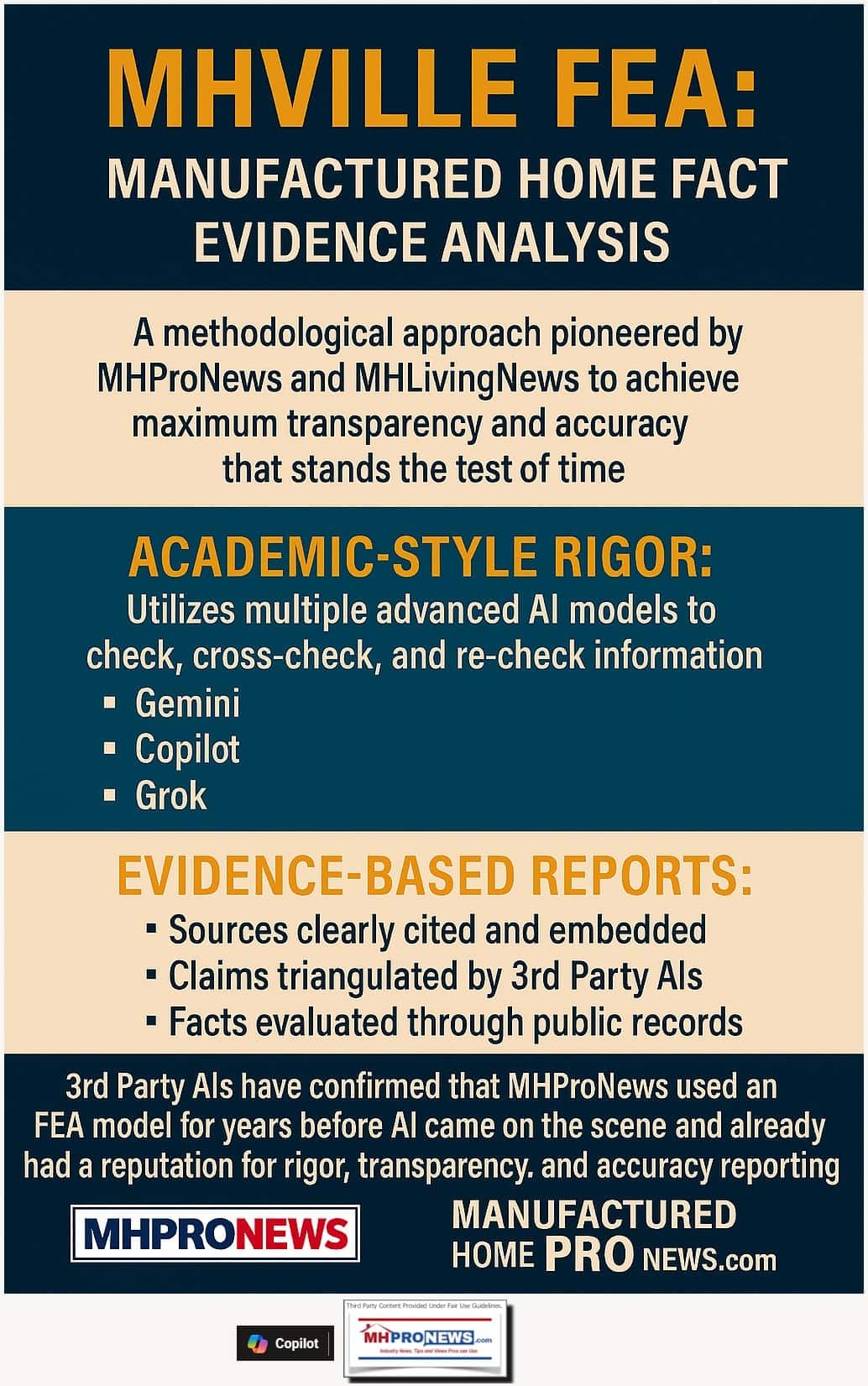
Those reports have been “Facts-Evidence-Analysis” (FEA) checked using third-party AIs to produce an ‘academic style’ of cross-checking.
People deserve clarity and information that is reliable. Check in for more in the days ahead. ##
L. A. “Tony” Kovach